AI visibility for B2B service companies
In B2B the supplier is chosen before the first call. If you aren't on the list your client assembles while researching, you don't compete — and today that list is assembled by asking an AI.
In consumer markets, AI recommends and the person buys in minutes. In B2B something different and quieter happens: AI helps assemble the supplier shortlist weeks before anyone picks up the phone. Whoever isn't on that list never finds out they competed.
The short answer: why AI visibility weighs more in B2B
Because the buying cycle is long and most of it happens without the supplier knowing. The committee researches, assembles a shortlist and only then contacts two or three. If AI doesn't name you during that research, you don't make the list — and you didn't lose the sale, you never knew it existed.
How a B2B purchase is really decided
Anyone selling professional services recognizes it immediately: when the call comes, the client already knows what they need, has already seen options and already has an idea of price. The conversation doesn't start at zero, it starts halfway.
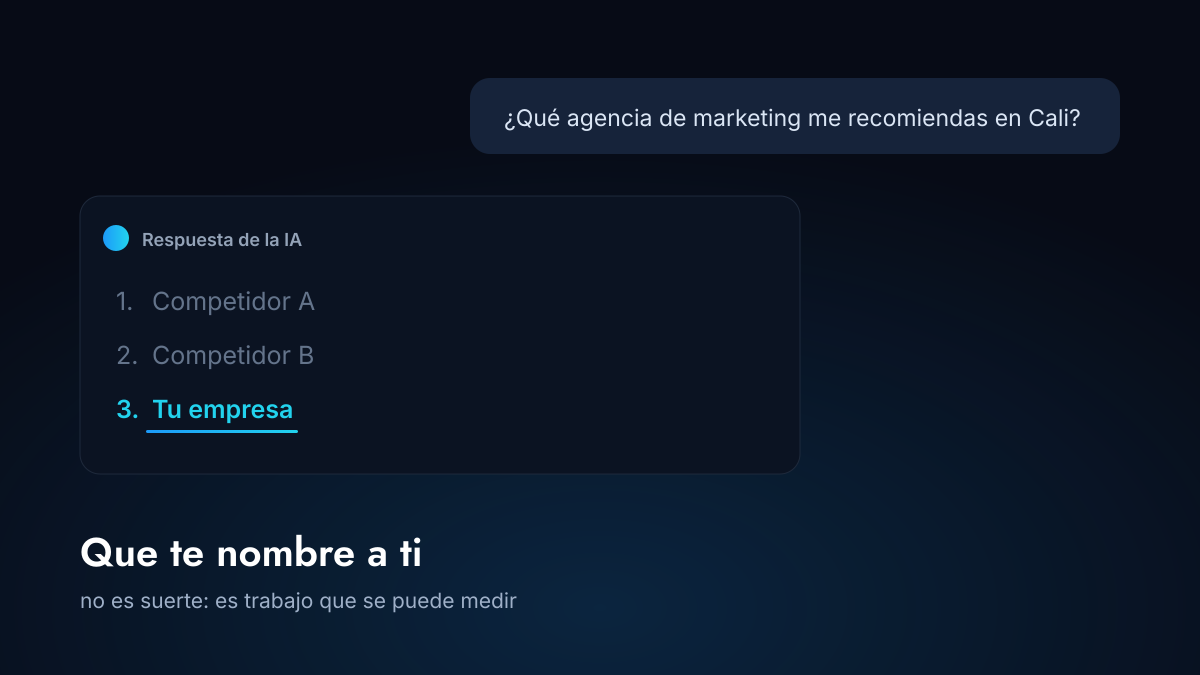
That prior research used to be done with referrals, with Google and with two or three known suppliers. Today it includes a question to ChatGPT or Gemini —"which companies do this in Colombia?"— whose result forms the initial list. And that list has an uncomfortable property: it's short. AI doesn't return twenty options, it returns three.
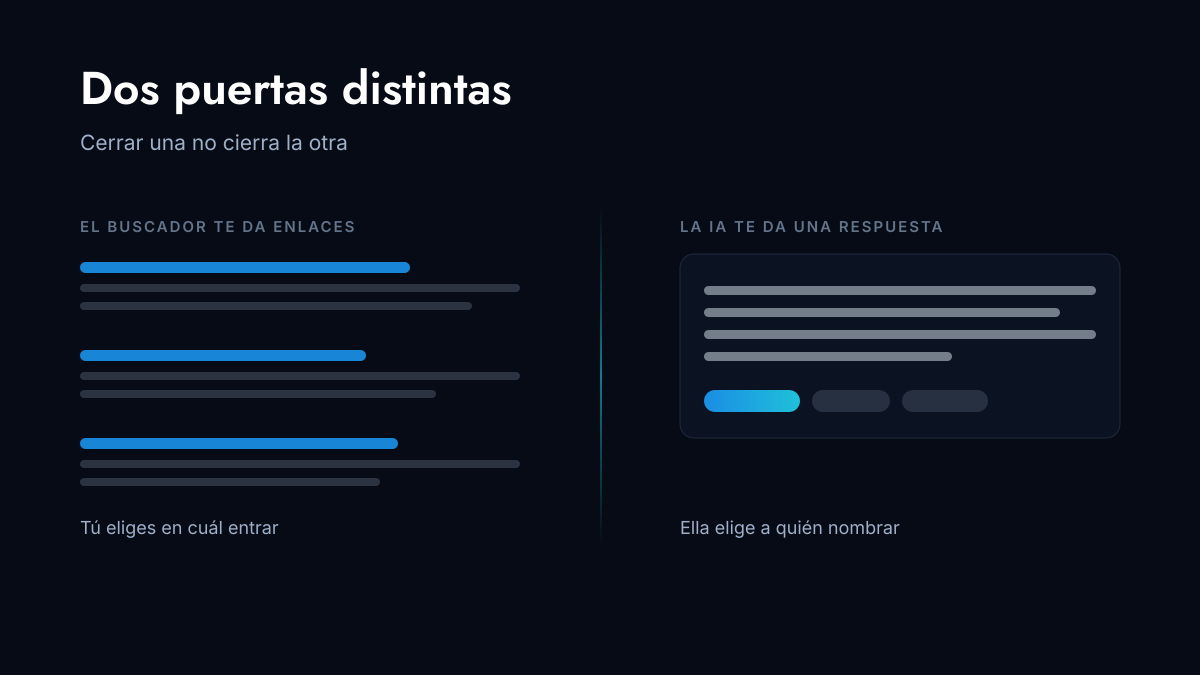
The underlying change is well described by Bain's research on AI search: more and more decisions are resolved inside the answer, without the person visiting the suppliers' sites. For whoever is selling, that means the first impression no longer happens on their website.
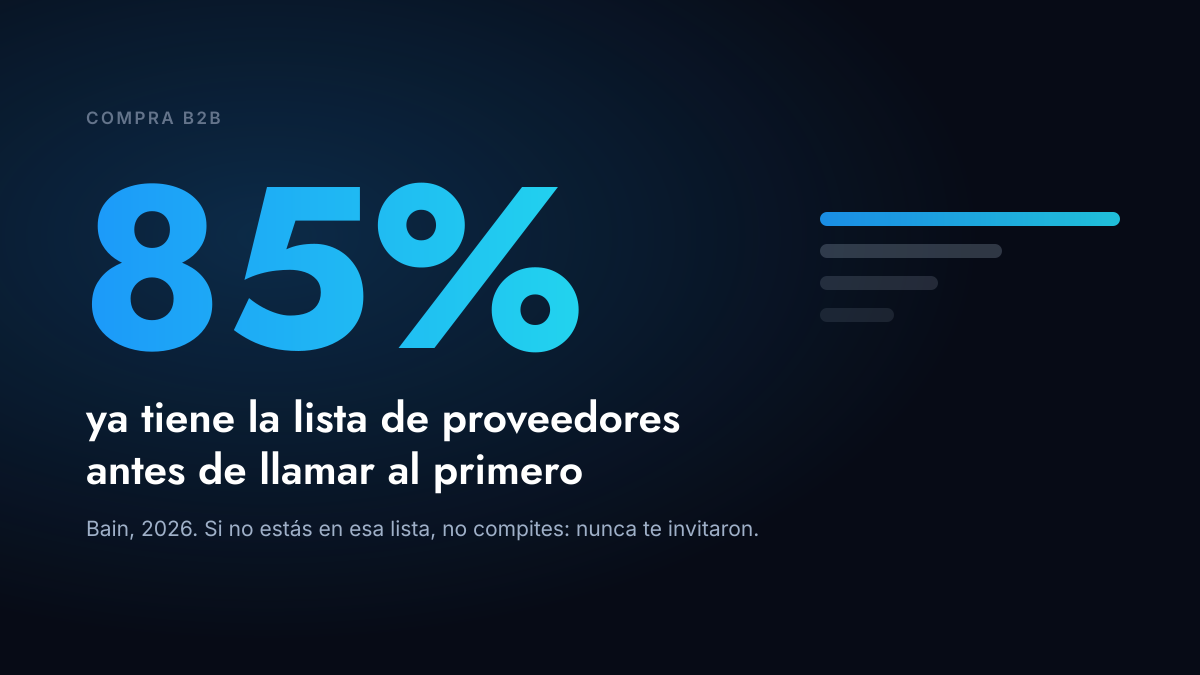
Bain, 2026: 85% of B2B buyers arrive at the first conversation with the supplier list already assembled. The visibility work happens in step 1, which is the only one where the supplier isn't present.
Why it pays off more in B2B than in consumer
By arithmetic, not by fashion. A professional services company doesn't need thousands of visits: it needs to appear in front of the few companies that are looking for what it sells this quarter. With tickets of several million, a single new client justifies months of work.
And the visitor arriving from an AI is exactly that: someone who has already compared. Semrush measured it at about 4.4 times more value than the regular organic visitor. In a volume business that difference is pleasant; in B2B it's the difference between the channel working or not.
What to do when the budget is tight
The answer isn't doing everything half-way, it's narrowing the front. A company with four lines of business and budget for one has to choose one: the most profitable or the one it wants to grow. Working all four with the same money moves none of them.
The order with a short budget, which is also the order from cheap to expensive:
- That the site can be read. If AI crawlers are blocked, nothing else matters. It's fixed in days.
- A page that answers the buying question for that line of business — not "our services", but the specific question the customer asks.
- The pricing or ranges page. It's the one with the highest intent: whoever asks how much it costs is already deciding.
- External mentions, when there's budget. It's the slowest and the one that weighs most.
The first three points fit inside a small scope, for a single line of business. If you want to size it, the market ranges are in what ranking on Google and in AI costs.
Where to start
By knowing how many of your sector's questions you appear in today. If the number is zero —which is the most common in B2B, because almost nobody has worked on this yet— the advantage is that competition for those questions is low and the ground is open.
If you've also noticed AI names your competitors and not you, the specific causes are in why ChatGPT doesn't mention your company. And if you're going to hire someone, these eight questions will save you months.
At Statum Digital we work with professional services and B2B companies, with few accounts at a time, in a monthly SEO and GEO plan. The first step is the measurement.
Frequently asked questions
Does it work for small companies?
Yes, and sometimes better: in niche questions competition is low and a small company can appear where a large one hasn't bothered. What doesn't work is trying to cover many lines of business with a small budget.
How many customers does it bring per month?
It isn't a volume channel and that's worth saying clearly. In B2B it brings few leads, highly qualified, with a long cycle. Anyone who needs many leads fast should be looking at paid advertising, not this.
What if my sector is very technical or niche?
That plays in your favor. The more specific the question, the less competition there is and the easier it is for the engine to cite you, as long as there's a page that answers it well.
What's the minimum scope it makes sense to start with?
With the measurement and a single line of business. You don't have to open all the services at once: you pick the one you want to grow, measure where you stand in that service's questions and work there until the number moves. Splitting the same budget across four lines usually ends up moving none.
My clients come from referrals and tenders. Is this useful to me?
Yes, and in those two cases more than it seems. The referral no longer arrives directly: they're given your name and the first thing they do is verify it, increasingly by asking an AI. If there's nothing solid about your company for AI to cite, the referral arrives lukewarm or doesn't arrive. And in tenders the same happens one step earlier: whoever assembles the invitee list looks for suppliers, and today that search starts with a question, not with a directory.
What if my buyer is traditional and doesn't use artificial intelligence?
In B2B the buyer is rarely one person: it's a committee. And whoever does the prior research is almost never the one who signs —usually the most junior profile on the team, the one assembling the list to present it. It only takes one of them consulting for your absence to weigh on everyone's decision.
My sales cycle is six months or more. How do I measure this in the meantime?
With the indicator that does move over that period: how many of your sector's buying questions you appear in, and in what position. That's what gets measured each month. Sales come later and also depend on your sales process, so using them as the only thermometer in the first months just generates arguments without data.
Does this replace my sales team?
No, it changes their starting point. Calling someone who doesn't know you is one thing; entering a conversation where your name already came up when they asked for recommendations is another. The salesperson's work doesn't disappear: it starts several steps further along.
What happens when my competition starts doing the same?
It gets more expensive to enter, which is why timing matters. The mentions and sources that hold your name up accumulate over time: whoever has spent a year being cited by sector media and directories isn't displaced in a month. Today in most sectors in Colombia that race is only just beginning.
We sell in several countries. Does the measurement work the same?
It works, but it's done per market. An engine's answer changes depending on the country you ask from and the language, and so do the competitors it names. Measuring once and assuming it applies to the whole region is the most common mistake in companies with regional operations.
Does AI name your brand?
Enter your domain and we tell you in seconds whether AI already recognizes your brand, and what your site is missing for the engines to read you.
Free, in seconds, no signup.