I invest in ads and customers don't come
Thousands of people reached in the report and three messages the sales team never hears from again. The conclusion isn't that advertising doesn't work: it's that the campaign is asking for what you don't need.
The scene repeats in services companies of every size: a few million pesos go into ads, the report shows thousands of people reached, and the sales team gets three messages asking for prices that never reply to the second message. The easy conclusion is "digital advertising doesn't work for my business". The real one is almost always different, and it's fixable.
The short answer: why you get tyre-kickers and not customers
Because the campaign is asking for what you don't need. Platforms deliver exactly what you optimize them for: ask for messages and they bring people who write; ask for engagement and they bring people who comment. For them to bring buyers you have to ask for buyers, and for that they have to be able to tell them apart, which is where almost everything fails.
The five leaks, in order of frequency
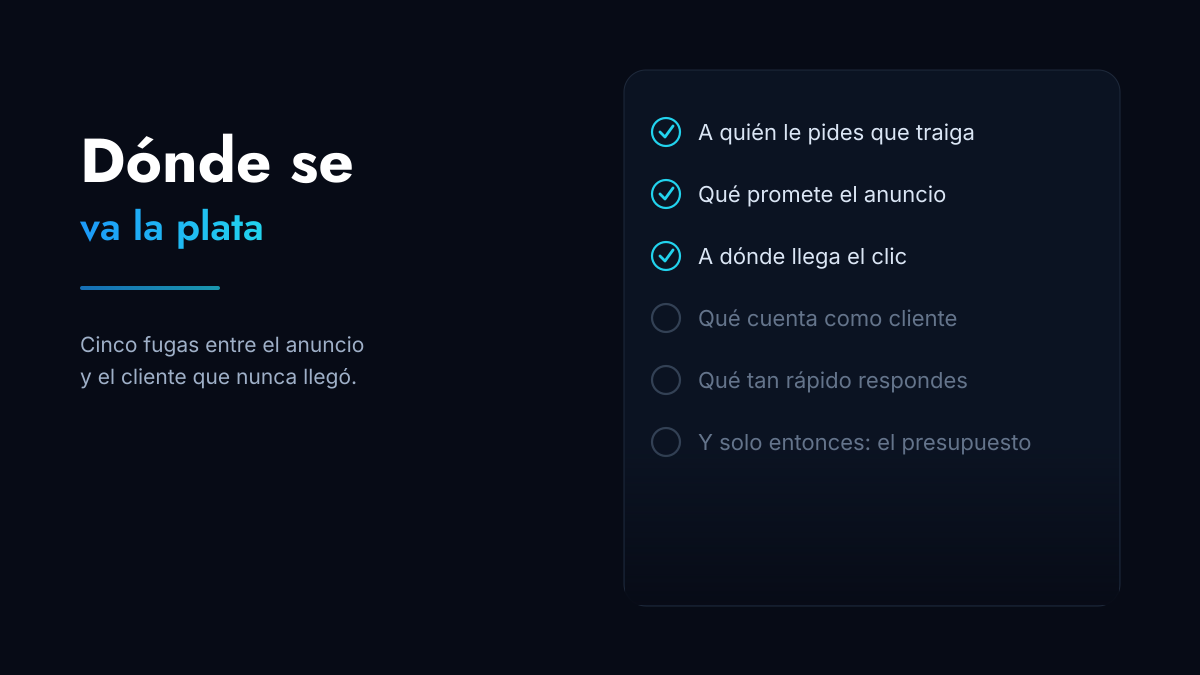
They aren't five separate problems: they're five points where the money is lost between someone seeing the ad and your salesperson closing the sale.
Each rung keeps a share. Fixing the last one without fixing the first is useless: if the wrong people come in at the top, all you're doing at the bottom is responding faster to someone who was never going to buy.
1. You're asking the platform for the wrong result
It's the biggest leak and the cheapest to plug. When a campaign is configured to get "messages" or "engagement", the system looks for people with a history of writing and commenting — not necessarily of buying. And it finds them: that's why plenty of messages arrive and no sales.
Configuring it to get conversions changes who the ad is shown to. It brings fewer people and costs more per person, and even so it usually comes out cheaper per customer. It's counterintuitive and it's the reason why comparing "what each message cost me" leads to the wrong decisions.
2. The ad doesn't filter
An ad saying "the best services for your company" attracts everyone, and attracting everyone is expensive. It's essential to communicate who it's for, where you operate and from what investment range you work, which filters out those who don't qualify.
Putting the price or the range in the ad reduces the volume of leads and raises the quality. In some cases it's a good idea, though this also depends on the strategy.
3. The click lands on a page that doesn't connect
The ad promised something specific and the person lands on the home page, or on an Instagram profile. That's where a good part of what you paid to bring them gets lost: nobody browses looking for what they were promised, they go back.
The landing page has to continue the ad's sentence, not introduce the company. And if it also loads slowly, the leak gets bigger: a good share of people leave before seeing the content —Google's data on load speed is years old and still emphatic. It's worth being clear about this because it can't be fixed from the campaign: however much the targeting is adjusted or the budget raised, the problem is in the site and it's solved with development.
4. Nobody defined what counts as a lead
This is one of the most important points and it almost never gets written down. A conversion isn't defined by the platform: you define it. That's why it has to be settled before starting, not after. If "click on WhatsApp" is being counted as a lead, two things happen at once: the report looks great and the system goes out looking for more people who click on WhatsApp, which isn't the same as people who buy.
Defining it takes one meeting: what data the person has to leave, what questions they have to answer and at what moment they become a real opportunity for the sales team. That gets installed in the tracking —both Google Analytics key events and Google Ads conversions are made for exactly that— and it changes two things at once: what gets reported and who the system goes out looking for.
5. The lead arrives and goes cold
In services, the advantage of responding fast is enormous and it doesn't cost an extra peso of ad spend. A lead who wrote at 10 in the morning and gets a reply the next day is already talking to another supplier. This leak isn't the agency's or the platform's, but it takes a large share of the budget.
If your team can't respond instantly —or the leads come in at night and at weekends— today it's solved with technology: an automation that replies the moment the message arrives and collects the data, or an artificial intelligence agent that handles the first conversation, qualifies and even books the appointment, and passes on to the salesperson only what's worth it. There are tools for every budget and it's one of the improvements that pays for itself fastest, because it doesn't add a peso to the ad spend: it simply makes use of the leads you're already buying.
Identify where you're failing
With two questions to the sales team, not with a platform report:
- Are the leads that arrive the profile we're looking for? If the answer is no, the problem is upstream: in what's being optimized for and what the ad says. Raising the budget only brings more of the wrong people.
- Are they the right profile and still don't close? Then the advertising is doing its job and the problem is the offer, the price, the response time or the sales process. Changing agency in that scenario fixes nothing, and it's one of the most expensive mistakes made.
The order to fix it in
- Tracking first. Without knowing what counts as a lead, everything else is decided blind. It's a matter of days.
- Then the campaign objective, so the system looks for buyers and not conversationalists.
- Then the ad and the landing page, which work together: filter at the top and answer at the bottom.
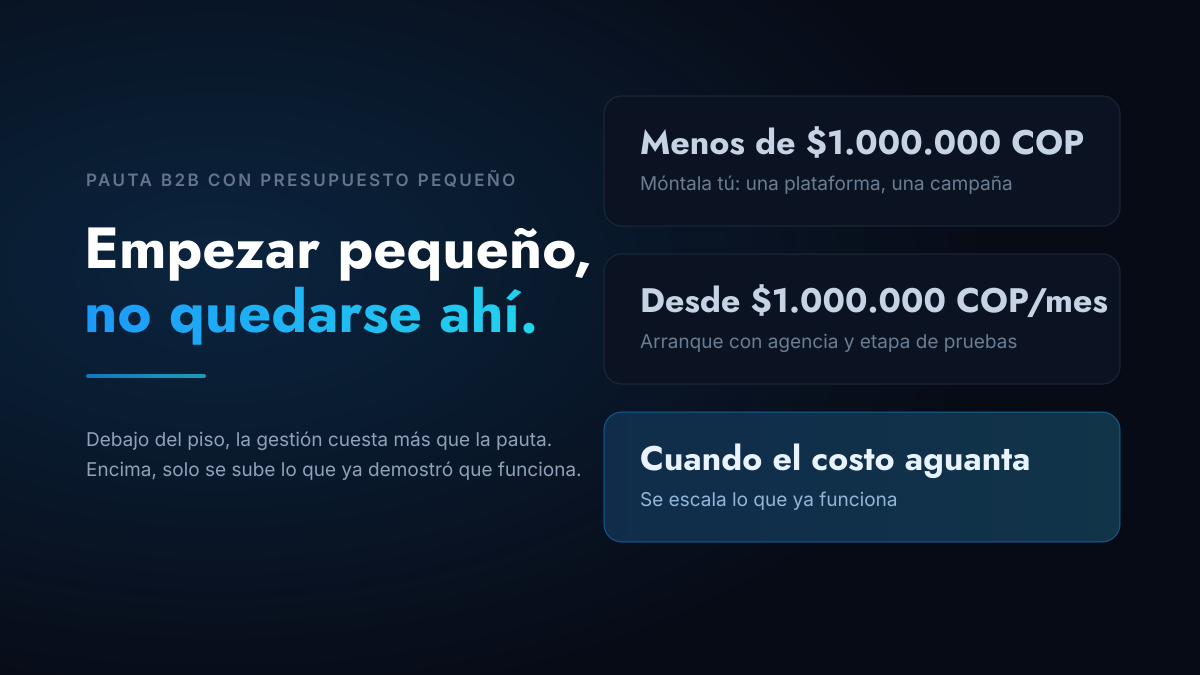
- Last, the volume. Raising the budget on something that already works multiplies; doing it before only speeds up the spending.
And a realistic expectation, separating the two things usually mixed up: the changes are made in days, but judging whether they worked takes weeks, because the campaign needs to accumulate enough results for chance not to be in charge. With small budgets, longer.
When the problem isn't the advertising
There's one case worth naming because it comes up more and more: the company that depends on word of mouth and sees sales drop from one month to the next. Advertising can plug that hole fast, but the underlying reason is usually that the referrals no longer arrive directly — whoever gets your name checks it before calling you, and today they check it by asking a search engine or an artificial intelligence. If there's nothing there to back your name up, the referral goes cold. That front is worked differently, and it's explained in why ChatGPT doesn't mention your company.
How we approach it at Statum Digital
In our managed paid media service the start isn't setting up campaigns: it's getting the tracking in order and agreeing what counts as a lead. Then we advertise on whichever platforms apply, with the accounts always in the client's name and with a live dashboard where spend and results are visible without waiting for the report. If you want to know what to look at before hiring anyone, it's in the signs your advertising is being badly run.
Frequently asked questions
People only write asking for prices and then disappear. What do I do?
It's the classic symptom of a campaign optimized for messages. It's corrected in two moves: change the campaign objective to conversions with a form or a page that asks for minimum details, and put something in the ad that filters — the price range, the type of company you work with or the minimum project size. You'll get fewer messages and more conversations that go somewhere.
How much do I have to invest for it to start working?
More than an amount, what matters is the ratio between what you pay the supplier and what goes to the platforms: if the fee weighs more than the spend, the numbers don't work. And on small budgets it's better to concentrate everything on one platform and one objective, because splitting it across three stops any of them accumulating enough data to optimize.
Is it better to pay per click or per impression?
To get customers, neither: it's better to pay for the result that's useful to you, which is how conversion campaigns work. Paying per click rewards cheap traffic, and cheap traffic tends to be the traffic that buys least.
I've been investing for three months with no results. Do I change agency or strategy?
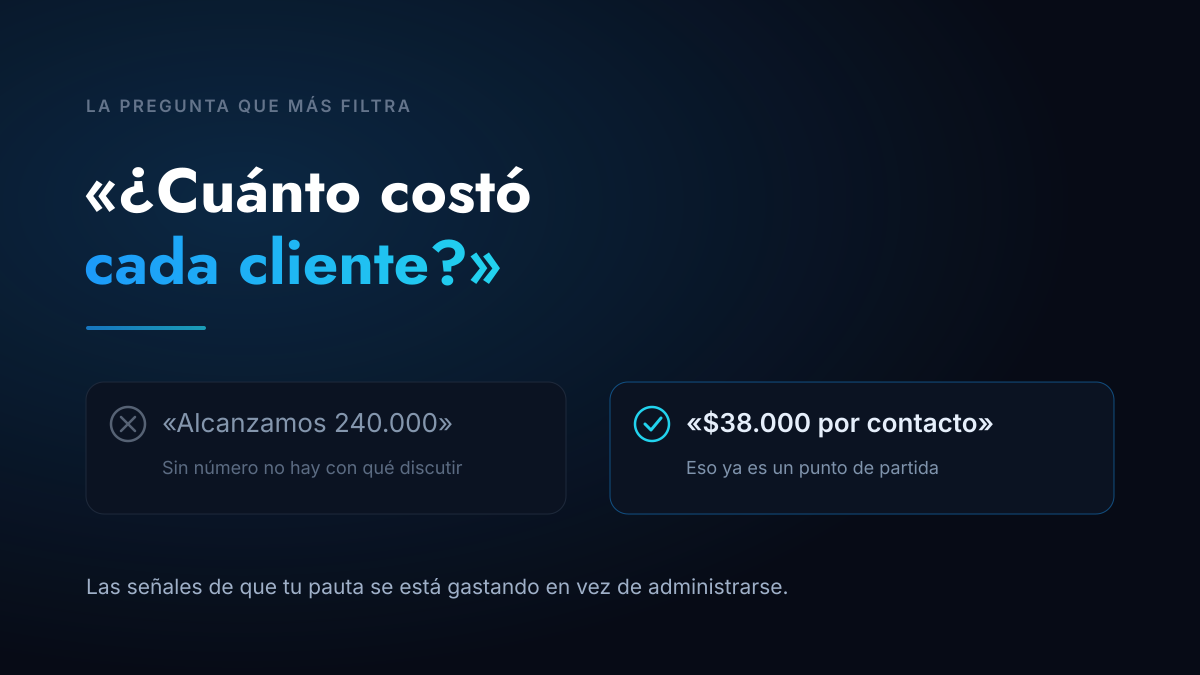
Before deciding, ask for two figures: what each valid lead cost each month, and what was tested. If neither exists, the problem is management. If both exist and the cost per lead is coming down but sales aren't moving, the bottleneck is after the advertising and changing supplier won't solve it.
Does advertising work for companies selling to other companies?
Yes, with two differences you have to accept: the lead costs more than in consumer products and the cycle is longer, so judging it by same-month sales leads to switching it off just when it was starting to pay off. It's measured by qualified leads and by movement through the funnel.
Can I do it myself from the ads manager?
You can, and on small budgets it's sometimes the sensible thing. What changes with someone dedicated isn't pressing buttons but three things: getting the tracking properly installed, sustaining a testing rhythm and knowing how to read when a result is real or is chance. If you're going to do it in-house, those three are what you have to solve.
What do I do with the leads that didn't buy?
You don't throw them away. They're the cheapest list you'll ever have: they already know you and they already raised their hand. They're useful for retargeting with ads and for direct email, and in services with a long cycle that's usually where the sale that didn't arrive in the first month lives.
Does AI name your brand?
Enter your domain and we tell you in seconds whether AI already recognizes your brand, and what your site is missing for the engines to read you.
Free, in seconds, no signup.