Where to advertise: Meta, Google, TikTok or LinkedIn
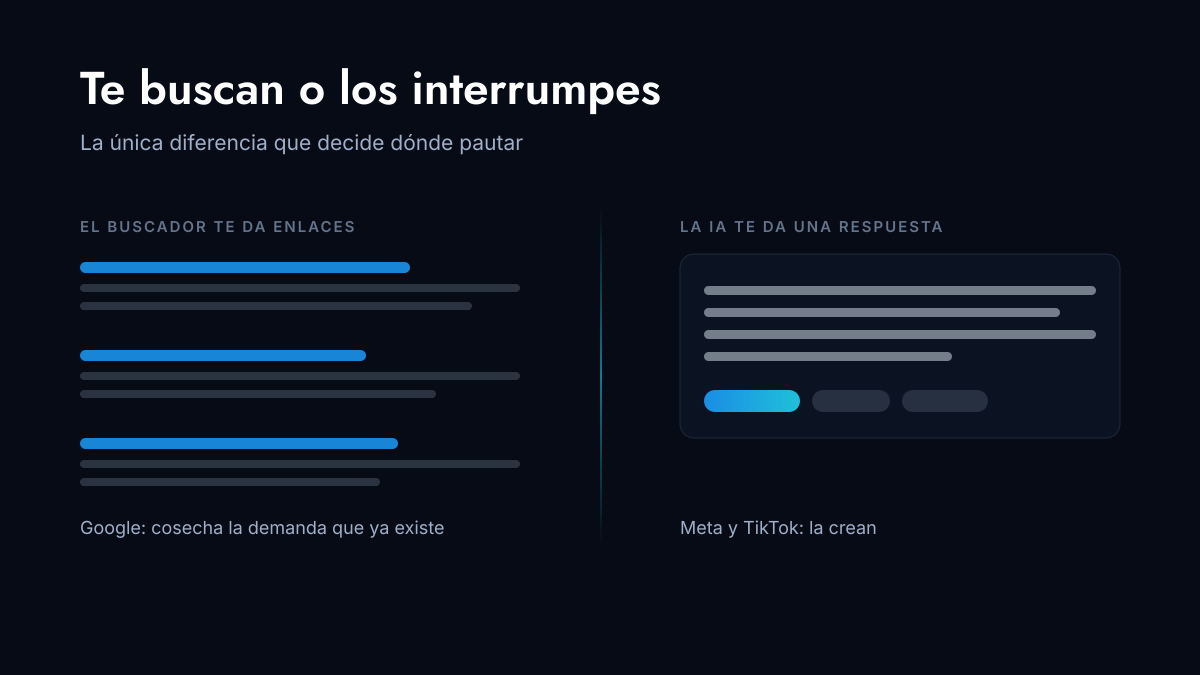
"What works better, Google or Meta?" has no answer because the question is badly framed. One reaches whoever is already searching; the other shows it to someone who doesn't know they need it yet.
The question always arrives phrased the same way —"what works better, Google or Meta?"— and it has no answer because it's badly framed. The platforms aren't competing to be better: they do different things. One reaches whoever is already searching for what you sell; the other shows it to someone who doesn't yet know they need it. Choosing wrong isn't a matter of taste: you pay for it on every click.
The short answer: which one suits what you sell
If your customer already knows they have the problem and is searching for it, start with Google. If they aren't searching and the need has to be awakened, start with Meta. TikTok works when the product is understood by seeing it. And LinkedIn is justified when the exact job title of the decision-maker is worth far more than the cost of the lead.
The only difference you have to understand
Everything else follows from this one: on some platforms the person is looking for you and on others you interrupt them.
When someone types "accounting advisory for small business in Cali" they're raising their hand. They already have the problem, they've already decided to solve it and all that's left is choosing who. That lead costs more per click and closes far better, because it arrives warm. In Colombia almost all of that demand goes through one place: 93.7% of the country's searches are on Google.
By contrast, someone watching videos didn't ask to be told about you. There the ad has to awaken the need before selling anything, which means the message weighs more than the targeting and that more than one impact is almost always needed. In exchange, reaching them is cheaper and you can get to people who would never have searched for your service.
| When it suits | What to expect | |
|---|---|---|
| Google Search | When people already search for you by the problem or the service | An expensive but warm lead. The volume is set by the market: there are no more searches than there are |
| Meta Facebook and Instagram | When the need has to be awakened, and to re-reach whoever already knows you | Volume and low cost per reach. Depends on the message and the pieces, which wear out |
| TikTok | When the product or the result is understood by seeing it | The cheapest reach and the youngest audience. Requires video pieces made for it |
| When the decision-maker's job title is the filter that matters | The most expensive lead of all. Only justified if a client is worth a lot |
None replaces another. The usual combination in services: Google to harvest the demand that already exists and Meta to create it, with the rest coming in when the business calls for it.
Google: the demand that already exists
It's the natural starting point for almost any services company, with one limitation to accept up front: Google doesn't create demand, it harvests it. If nobody is searching for what you sell —because it's new or because the customer doesn't know the solution exists— there's nothing to capture there however much budget you put in.
Its other face is the competition: in contested categories the click goes up in price and the work gets fine-grained —which searches you buy, which you block, what the landing page says. And it's worth bearing in mind that the ground is shifting: more and more searches are resolved in the artificial intelligence summary without the person entering any site, which makes the click that remains more expensive. That change is explained in how SEO and GEO differ.
Meta: where the need is created
Facebook and Instagram are still the best place to reach a lot of people cheaply and, above all, to speak again to whoever already knows you: whoever visited your site, whoever left their details, whoever watched the video to the end. That second part is the most wasted thing in badly run accounts.
Its weak point is that everything depends on the message and the pieces, and the pieces wear out: the same image shown to the same audience costs more every time. Without new creatives coming in regularly, the cost per result rises on its own.
TikTok: when the product is understood by seeing it
It has the cheapest reach on the market and an audience that's no longer only teenagers. It works when something can be shown —a before and after, a process, a place— and it doesn't work when the selling argument is abstract and has to be read.
Before going in it's worth reviewing the campaign objectives TikTok offers, because its catalog isn't the same as Meta's and that's where it's decided who the ad is shown to. An expensive and frequent mistake: uploading the same pieces from Meta. On TikTok video has a different rhythm and a different tone, and a piece that feels "like an ad" is skipped in the first second. If there's no capacity to produce your own video, it's better to wait.
LinkedIn: the most expensive lead, and sometimes the only useful one
It is, by design and according to LinkedIn itself, the platform where you can target job title, company size and sector with a precision no other offers. It's also, by far, the most expensive per lead.
The maths is simple: if a new client leaves you several million in profit, paying a lot to reach exactly the person who signs is good business. If your ticket is low, it doesn't work. And there's a shortcut worth trying before paying the full rate: use LinkedIn's fine targeting to discover who you serve and then go looking for those same people on Meta or Google, which is cheaper.
This is how it's decided, without guessing
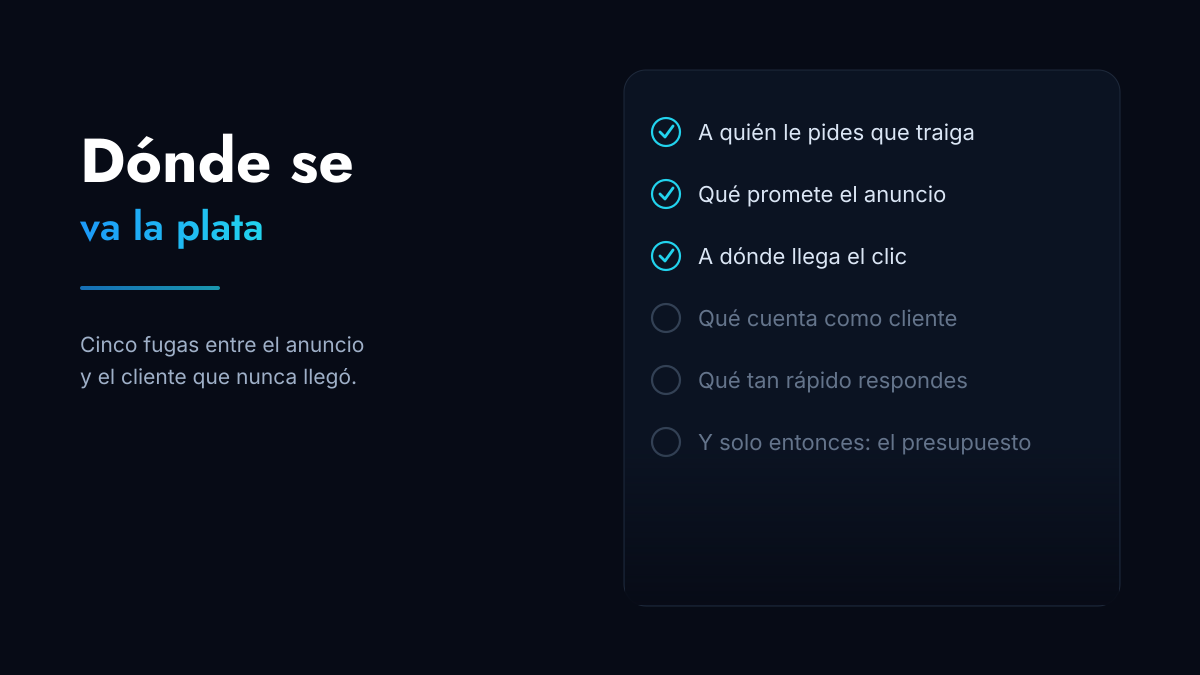
Choosing a platform is the last decision, not the first. What comes before is the work that makes it obvious:
- Look at whether people search for you. There are free tools that say how many people in Colombia search for what you sell. If there's volume, Google goes first. If there isn't, don't insist there.
- Look at what your competition is doing and where. Each platform's ad library is public: you can see who's advertising, with which pieces and which pages the traffic goes to. It isn't for copying, it's for knowing which messages you'll be competing against and where there's free space.
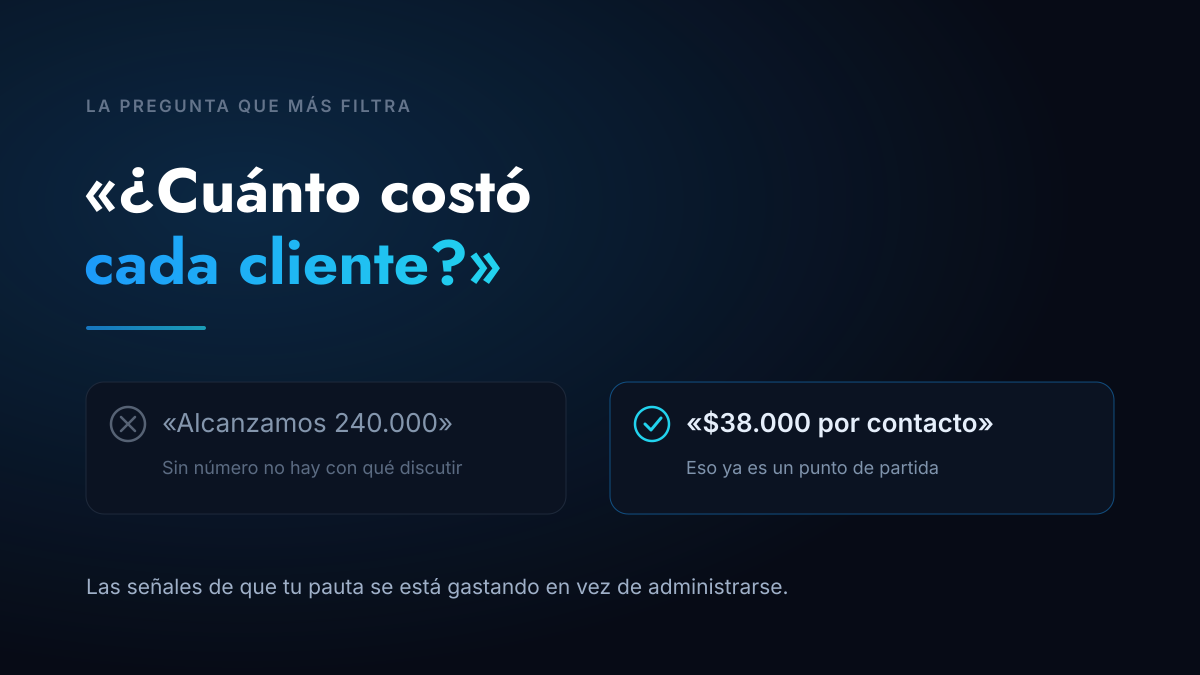
- Look at what a customer is worth. That's what decides whether you can afford an expensive lead. Without that figure there's no way to know whether a cost per lead is good or bad — the full calculation is in what paid media management costs in Colombia.
- Look at what you can produce. Choosing TikTok without being able to make video, or Google without being able to touch the landing page, is choosing a channel you won't be able to feed.
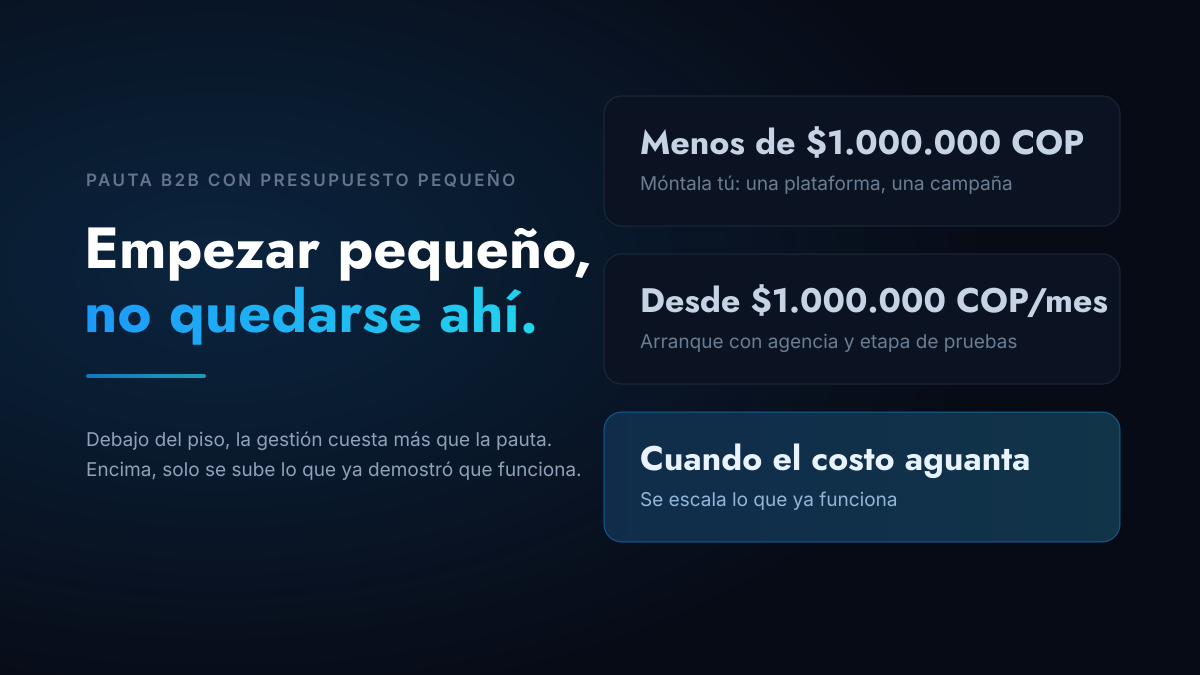
- Define your objectives and your budget. How much you're willing to pay for each customer or each sale, and how much you're willing to invest testing over one or two months.
With those five answers on the table, the strategy builds itself: who we're talking to, with what message, which platform we start on and what gets tested first. That's where a good advertising plan comes from, whether you decide to put everything into one platform or into several at once. An agency like Statum Digital walks that route with you: puts the analysis on the table, translates your objectives into numbers —how many customers, at what cost and in how long— and builds the plan around the budget you defined, not the one it suits them to sell.
The plan is written in pencil
There's something practice teaches quickly: however diligent the analysis, the field has the last word. It happens often that the platform that was obvious on paper performs worse than the one that looked secondary, or that a format nobody had faith in ends up bringing the best leads. That isn't a planning error: it's information that only appears when you test.
That's why the plan is made to give direction, not to tie you down. The hypothesis is defined, tested with a controlled budget, measured against the business KPIs and corrected. Whoever leaves no room to test is stuck with their first hunch for a year; whoever tests with method finds their best channel in weeks.
That same openness applies to platforms almost nobody considers at first. Beyond Google, Meta, TikTok and LinkedIn, there's ad inventory on YouTube, which combines video with all of Google's targeting behind it; on Spotify, where audio works surprisingly well for recall and for local businesses; on X, useful in niches and in topical conversation; and inside artificial intelligence assistants, a space that's only just opening —ChatGPT has already started moving there— and that will grow. None of them is a default recommendation: they're cards on the table to be tested when the business and the budget allow. And there's a prize for arriving early: new inventory almost always starts with little competition, which is to say cheaper.
Why the answer is almost never a single platform
Because the customer doesn't live on one. They watch a video on Instagram, do nothing, and three weeks later search Google for your company's name or the problem that stayed on their mind. If you measure each platform separately, Meta looks useless and Google looks like a genius, when in reality one opened the door and the other charged for the ticket.
That's why it's better to decide with a single source of numbers —yours, not each platform's— and look at the whole. Platforms attribute results to themselves and the sum always comes to more than reality.
How we do it at Statum Digital
If you got this far, the underlying question wasn't "Google or Meta". It was how to stop guessing. That's exactly what we solve.
We start by researching the ground: what your competition is advertising and with which pieces, which pages that traffic goes to, what content is working for them and what people are searching for in your category. The strategy comes out of that, along with the platform we start on and the testing plan for the first months. Never the other way around.
We run a single multi-platform package instead of selling each channel separately, and that gives you something very concrete: the day the numbers say budget should move from Meta to Google, add YouTube or test TikTok, it gets done. Without renegotiating the contract, without hiring another supplier and without losing the accumulated learning. Your investment follows the results, not the other way around.
The rest are house rules, and they all play in your favor: the accounts are always in your name, with their history; you pay the ad spend directly to the platform, so the money doesn't pass through a middleman and the invoicing is yours; you have a live dashboard to see spend and results without waiting for the report; and every month there's a strategy meeting where we go through the results and the opportunities to improve.
Frequently asked questions
I have a small budget. Google or Meta?
If there are people searching for what you sell, Google, because nobody has to be convinced they have the problem. If nobody is searching, Meta, because it's the only one of the two that can create the demand. With a tight budget, the worst decision is splitting it between the two.
Is LinkedIn Ads worth what it costs for selling to companies?
It depends on a single calculation: how much a new client leaves you. With high tickets, paying to reach exactly the person who decides is justified. With low tickets, no volume can save it. An intermediate alternative is using its targeting to understand who you serve and looking for that same profile through cheaper channels.
How many platforms should I run at the same time?
As many as you can feed with pieces and with enough budget for each to accumulate data. In practice, most services companies do well with two. Three or more is justified when there's already an operation producing content regularly.
Is advertising on Instagram useful if my customer is a company?
Yes, because companies don't browse: the people who work in them browse, and those people are there in their free time. What changes is the message and the expectation of closing: you don't sell a contract in an ad, you get someone to know your name and leave their details.
What about ads inside artificial intelligence answers?
They're appearing and they aren't yet a mature channel or comparable to the others. What is worth understanding is that AI is already diverting searches that used to end in a paid click, and that appearing inside those answers isn't bought: it's worked for. It's a different front from advertising.
How often do the ads have to change?
There's no calendar rule: they change when the cost per result starts rising with nothing else having changed, which is the sign the piece has worn out. On small audiences that happens in weeks; on large audiences it can take months.
Can I start on one platform and move to another if it doesn't work?
Yes, but it's worth giving the first one time to accumulate enough results before judging it. Moving platform every month is the surest way to pay three times for the initial learning and finish none of it.
Does AI name your brand?
Enter your domain and we tell you in seconds whether AI already recognizes your brand, and what your site is missing for the engines to read you.
Free, in seconds, no signup.